You walk to your local Kirana store. You pick up a packet of biscuits. You open your app, scan the faded blue QR code, and ping—the transaction is done. No change, no hassle, and—crucially for your wallet—no cost.
For years, we’ve lived in a unique “Golden Age” of digital payments. But as we process a record 21.7 billion transactions in January 2026 alone, the infrastructure is feeling the weight. The industry is no longer whispering about costs; they are publicly debating how to fund the highway we all drive on for free. The conversation around UPI Transaction Charges 2026 isn’t a secret conspiracy. It’s a high-stakes negotiation between a government committed to public digital goods and an industry managing a staggering 700 million transactions every single day.
The “Sustainability” Gap
In the beginning, UPI was a miracle of public infrastructure. To keep it free, the government has been injecting thousands of crores into the system.
But here’s the reality: Maintaining a system that handles 700 million daily payments with a 99.9% success rate requires massive server power. In the Union Budget 2026-27, the Revised Estimate for the current year’s incentive pool was hiked to ₹2,196 crore. However, the Budget Estimate for the upcoming FY27 is pegged lower at ₹2,000 crore.
This “funding dip” has triggered an industry-wide push. Banks and fintechs argue that they need closer to ₹10,000 crore to maintain the network’s integrity. Without it, the “Free” version faces a massive sustainability crisis.
The 1.1% Reality Check
You’ve likely seen viral WhatsApp messages about a “1.1% UPI Tax.” Let’s clear the air.
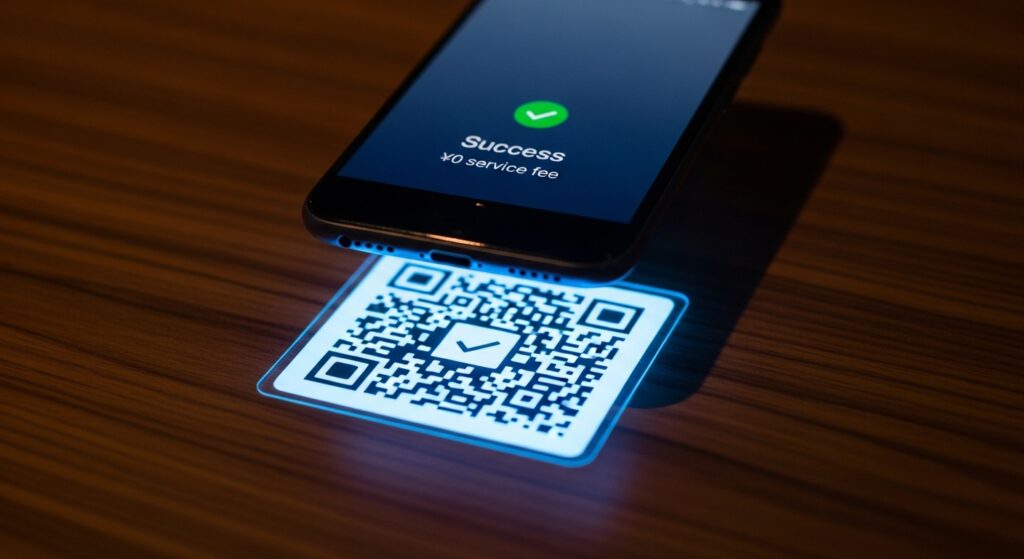
What most people miss is that this 1.1% fee is an interchange fee active since 2023. Crucially, it only applies to “Prepaid Payment Instruments” (PPI)—wallets like Amazon Pay or PhonePe Wallet—for merchant transactions exceeding ₹2,000.
If you are a student sending ₹500 to a friend or scanning a QR code for a ₹20 chai via your bank account, you are not paying this fee. The “standard” UPI scan-and-pay remains 100% free for consumers. The tension lies in a new, public push by the Payments Council of India (PCI).
As of February 1, 2026, the PCI is lobbying for a dual-tier MDR:
- 30 BPS (0.3%) for merchants with an annual turnover above ₹20 lakh (aligning with the GST threshold).
- A separate fee structure for large enterprises with a turnover above ₹40 lakh.
OFFICIAL STATUS: As of February 2026, the NPCI and the Ministry of Finance have maintained that UPI is a public digital utility. Standard P2P (Peer-to-Peer) and P2M (Peer-to-Merchant) bank-linked transactions incur zero charges for the user.
The Human Anchor: The Story of Sunil
Sunil runs a popular mobile repair shop in Lucknow. He has stopped taking cash because “scanning is faster.” “Last month, I did ₹3 Lakhs in business via UPI,” Sunil says. “For me, it’s free. But if they introduce a 0.3% fee for shops above the ₹20 lakh turnover mark, that’s nearly ₹900 a month. It won’t shut me down, but it’s a new cost in a business where margins are already thin.”
Sunil’s concern reflects the “Merchant Dilemma.” While the consumer pays nothing, the merchants above certain thresholds are the ones the industry is looking at to keep the servers running.
The “Convenience” Creep
While the core transaction remains free, the cost of UPI is appearing in subtle technical and service adjustments:
- Balance Check Caps: On August 1, 2025, the NPCI capped “Balance Checks” at 50 per day per app. This wasn’t a tax; it was a technical necessity to reduce API traffic that was clogging bank backends.
- Platform Fees: Apps like PhonePe and Google Pay have introduced nominal ₹1–₹3 “platform fees” for mobile recharges and bill payments—services that fall outside the core UPI scan-and-pay mandate.
April 1, 2026: Risk-Based Authentication
On April 1, 2026, the RBI’s new Risk-Based Authentication (RBA) framework goes live.
So what does that mean for you? It’s not a lever for charges; it’s a shield. RBA uses behavioral data—like your location or biometrics—to verify you. For high-value or suspicious transactions, it might require a fingerprint instead of an OTP, actually making the process faster and more secure for legitimate users.
TECHNICAL NOTE: If the shield fails and you are scammed, the “Golden Hour” remains your best hope. Dialing 1930 within 2 hours activates the CFCFRMS (Citizen Financial Cyber Fraud Reporting and Management System), allowing banks to communicate in real-time to freeze “mule accounts.”
The Contrarian Insight: Sustainability vs. Growth
What most analysts miss is that the “Free” model was essential for adoption, but the “Sustainability” model is essential for survival. Maintaining 700 million daily transactions requires an ecosystem where someone pays for the light bill.
The industry is moving toward a Tiered System. Small vendors (under ₹20 Lakh turnover) will stay free to protect the “Digital India” dream. But for large retail chains, that small 30 BPS toll is the “Oxygen” required to maintain a 99.9% success rate during peak festival sales.
The Bottom Line
The “Free” era of UPI isn’t dying; it is maturing.
The NPCI has built a world-class infrastructure that has made cash a choice. As we approach the end of 2026, the battle isn’t about “taxing” you—it’s about who pays for the massive technological engine under the hood. For the average user, the QR code remains your best friend.
What happens next depends on the balance between state subsidy and private sustainability.
Will you accept a more secure, more robust system if it means the giant retailers you shop at have to pay a small toll?
Read More Reports here